
For Buyers
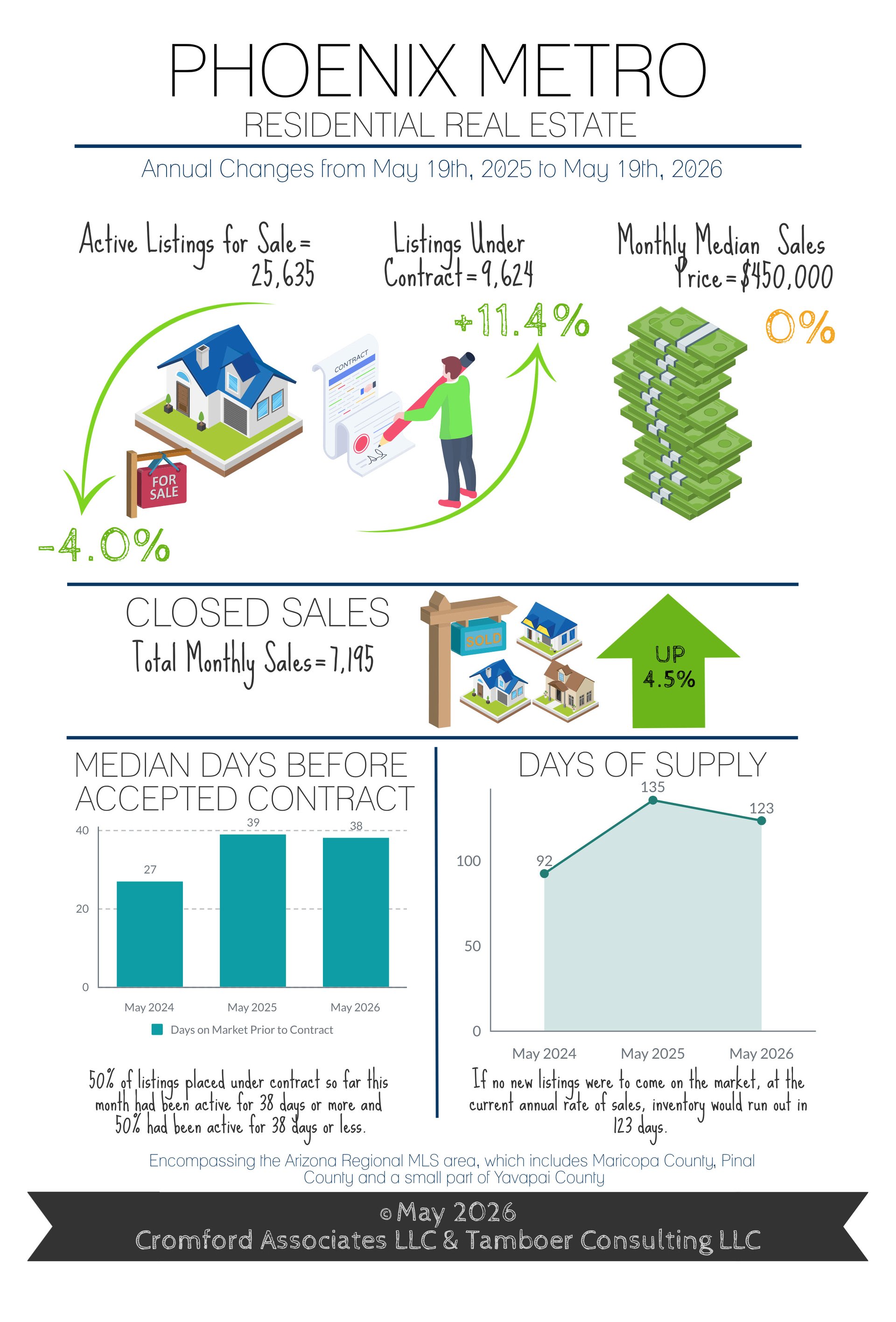
Incomes have been continuing to rise in our state. According to the most recent release from the Bureau of Economic Analysis, Arizona ranked 7th in the nation for nominal personal income growth at 4.3% and Arizona’s net earnings from work rose 5.7%. Both measures are well above the rate of inflation. Combined with home values remaining nearly unchanged year-over-year and mortgage rates holding near 6.6% over the past month, this suggests housing affordability is gradually improving.
Home values have been mostly flat for the past two years, and the median is still down 4.8% from the peak price of $480,000 recorded June 2022. However, homes below $500K have drifted down 4-5% during the same time frame while those between $500K-$1M have remained stable with little fluctuation. Meanwhile, homes over $1M surpassed 2022 a long time ago and are still on the rise in value.
The past 4.5 years have included a sharp price spike in 2021, followed by a correction in 2022 and very little appreciation from 2024 through 2026 for most homeowners. However, the likelihood that the next 5 years will follow the same trend is low. Purchasing in a buyer’s market is usually best for those who plan to own their home for at least 5 years in order to ride out cycles like this one, which turned towards a buyer’s advantage in November 2024.
There are advantages and disadvantages for buyers in today’s market. A major advantage is a lack of the frantic buyer urgency that was experienced in 2021, fueled by low supply and rapid population growth. Back then, buyers often only had a few minutes to tour a home, then felt pressured to waive appraisal and inspection contingencies as multiple offers flowed in. Asking for repairs was out of the question and 61% of sales were over asking price. Today, most homes are on the market for more than a month before landing a contract. Reduced buyer competition has made negotiations less stressful for buyers and increased seller willingness to offer repairs and closing-cost assistance. This can include a temporary mortgage rate buydown and cost the seller about $10,000. This level of seller aid was unheard of prior to 2023.
The disadvantage to buying in today’s buyer’s market is that home values tend to have low appreciation, no appreciation, or negative appreciation. Buyers typically like to purchase a home and watch it appreciate in value, but buyer’s markets can put a homeowner’s patience to the test. Those who purchase in this market should generally expect to own the home for at least 3-5 years to ride out the cycle. During that time, if a homeowner significantly improves the property it will improve their chances of building equity sooner.
While appreciation has been limited recently, buyers who hold their homes through a full market cycle can still build substantial wealth through a combination of appreciation and mortgage principal reduction. If the housing market pulls out of its slump over the next 5 years to average a mild 3% appreciation per year, a buyer who bought a median-priced home around $450,000 with 10% down could build equity faster than they might expect. After 5 years of just appreciating around the rate of inflation, there would be over $72,000 in appreciation, plus another $25,500 in equity from making the principal payments. Including the original down payment, that would amount to approximately $142,500 in total equity while enjoying the benefits of homeownership. This is why homeownership is often referred to as a “forced savings account”.
For Sellers
Buyer demand is up despite higher mortgage rates as listings under contract are up 5.1% and closed sales are up 7.6%. This year’s buyer’s market, while not ideal, is an improvement over last year. There is evidence of pent up demand that is often revealed once mortgage rates push below 6.5% and increases when it’s closer to 6.0%.
However, Greater Phoenix is now entering into its summer season. This comes with hotter weather, and a few holiday speed bumps starting with Memorial Day week. Whenever there is a 4-day work week buyer contract activity takes a dip, and this Memorial Day was no different, dropping 21% over the course of 2 weeks. Then, just as activity begins to recover, the market encounters the Fourth of July holiday week, followed by Labor Day.
Many sellers have decided to wait it out. New listings are added at the 2nd lowest rate seen since 2000, the fewest new listings were added in 2023 and 2026 looks like it will be in second place. Meanwhile, cancelled listings are up seasonally, but down year-over-year, which is also contributing to a decline in supply.
What to watch: Last year mortgage rates fell from 6.6% to 6.1% from August to September. That resulted in a spike of buyer contracts until Labor Day week hit and contract activity cooled. If that happens again this summer, sellers could see a better boost in buyer demand.
Commentary written by Tina Tamboer, Senior Housing Analyst with The Cromford Report
©2026 Cromford Associates LLC and Tamboer Consulting LLC

________________________________________________________________________________________________________________________________________________________________________________________________________________
For Buyers
Two local headlines published this month contradicted each other regarding the active supply situation in Greater Phoenix. The first, published on May 4, was titled “Phoenix housing inventory surges toward record highs.” The associated article stated the current active listing count is “a level only surpassed in two months in recorded history: April and May of last year.” This statement aligns with the last 12 years of historical data, but it doesn’t hold up to 25 years. Today’s inventory count is surpassed by every count recorded daily from 2006-2010. The highest count ever recorded by The Cromford Report is November 2007, where supply peaked at nearly 58,000 active listings before prices collapsed in the infamous 2008 Great Recession, resulting in the largest foreclosure crisis ever experienced. Today’s inventory counts are not remotely comparable to that time in history.
The second headline, published 10 days later on May 14, was titled “Arizona facing home shortage as unaffordability weighs on potential buyers” and declared that Arizona faces an immediate shortage of 56,000 homes, with a long-term shortage of 110,000. So which headline is correct? Is inventory surging to new highs or is it critically low? Surging inventory would put downward pressure on prices while an inventory shortage results in upward pressure. Looking at median sales price measures, they have had little fluctuation for more than two years, suggesting that neither of these theories is reflected in pricing trends.
In short, Greater Phoenix supply counts are not breaking records, they are not surging, and they are not critically low. Statistically, active supply is considered within normal range and stable for now. Meanwhile, buyer contracts have improved 11% over this time last year despite recent mortgage rate increases, indicating that buyer demand could increase significantly should economic certainty improve and mortgage rates fall closer to 6.0%.
For Sellers
The peak spring buying season is nearly over and total sales to date have exceeded last year by 2.9%. The largest improvement is in the luxury market where sales over $1M are up 10% and at a record high. Most impressively, sales over $5M are up 31% over last year and there have been 36 sales over $10M so far, already exceeding last year’s annual record of 32 before the year is halfway through.
As temperatures rise over 100 degrees in May and June, the luxury market typically sees a large spike in cancelled and expired listings. Ironically, this can cause supply to drop more than summer demand and put these areas in a short-term seller’s market. This exact scenario happened last year where Paradise Valley flipped from a balanced market in May to the #1 seller’s market by August due to record listing cancellations, then returned to a balanced market after new listings returned in September and October. While May isn’t over yet, a high level of April cancellations over $1M has already caused supply to drop early, which could be good news for those who choose to stay active over the summer
As for the rest of the sellers, it’s business as usual as buyers are still in the driver’s seat. Mortgage rates are back to 6.65%, which has the potential to stall buyer activity until it drops back below 6.5%. Home condition matters, seller incentives matter, and pricing matters. Expect marketing times to increase by approximately 6-10 days over the next 2-3 months.
©2026 Cromford Associates LLC and Tamboer Consulting LLC